
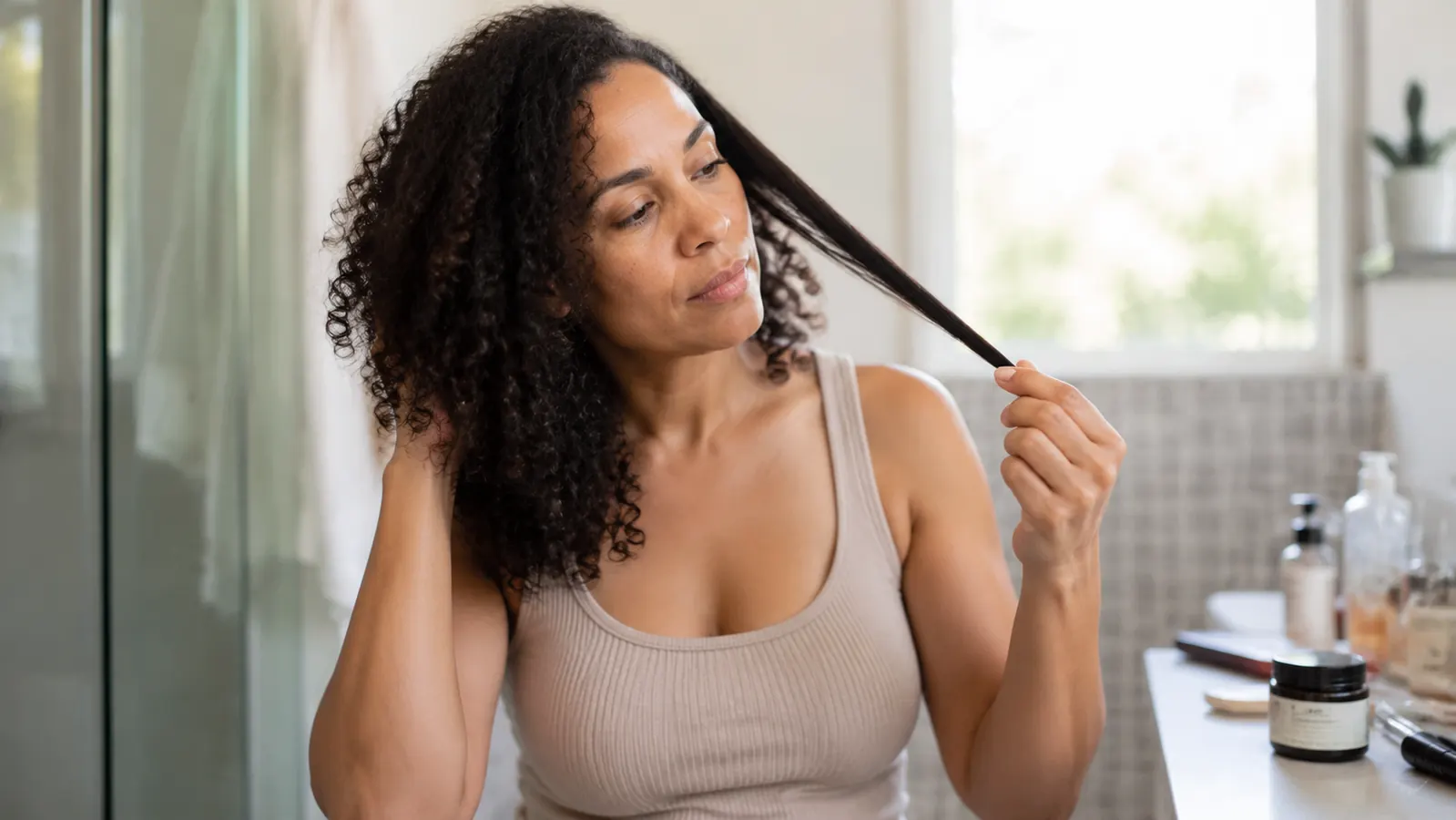
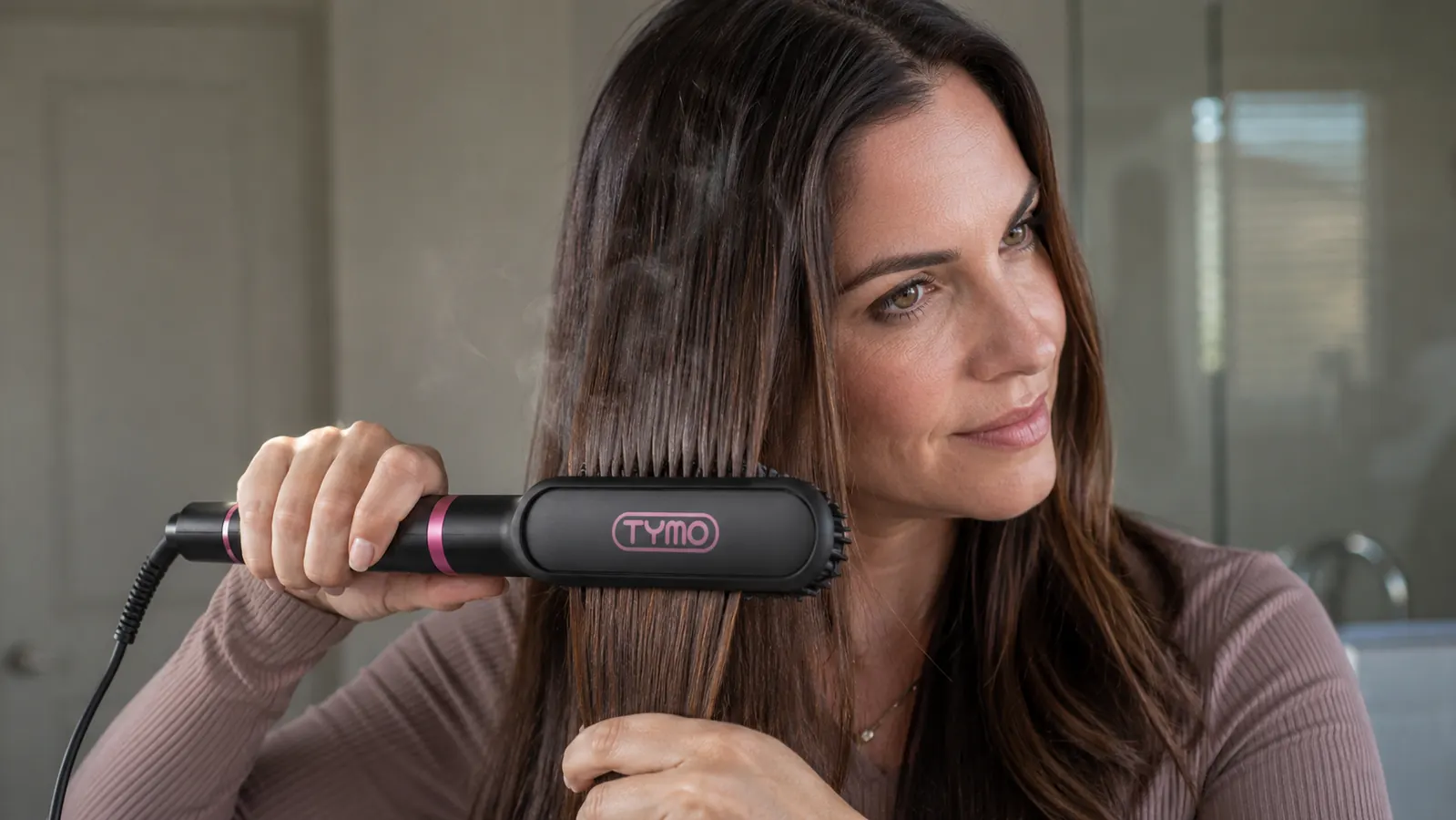
The first time I used the TYMO Ring straightener brush, I burned a tiny line into my wrist because I forgot the barrel stays hot even when you think you've angled it away from your skin. Nobody mentions that in the glowing five-star reviews. I have thick, curly, color-treated hair, box-dyed a deep brown over natural dark blonde, and this brush has been in my regular rotation for about five months now. I am not here to tell you it's magic. I'm here to tell you what actually happens when you run it through hair that fights back. I've since learned where the barrel's hot spots actually sit, and I've picked up habits along the way that nobody bothered to mention in a box insert that's mostly diagrams and no real guidance.
Most reviews of the TYMO Ring are written by people with fine or medium straight-ish hair who get it smooth in one pass and call it a day. That's not my hair, and it might not be yours either. So this is the review for the rest of us: the thick, the curly, the color-treated, the people whose hair has opinions.
Curious if it can handle hair like yours?
Check today's price and current availability for the TYMO Ring straightener brush on Amazon before you decide.
Amazon Check Today's Price on Amazon →What Nobody Tells You Before You Buy
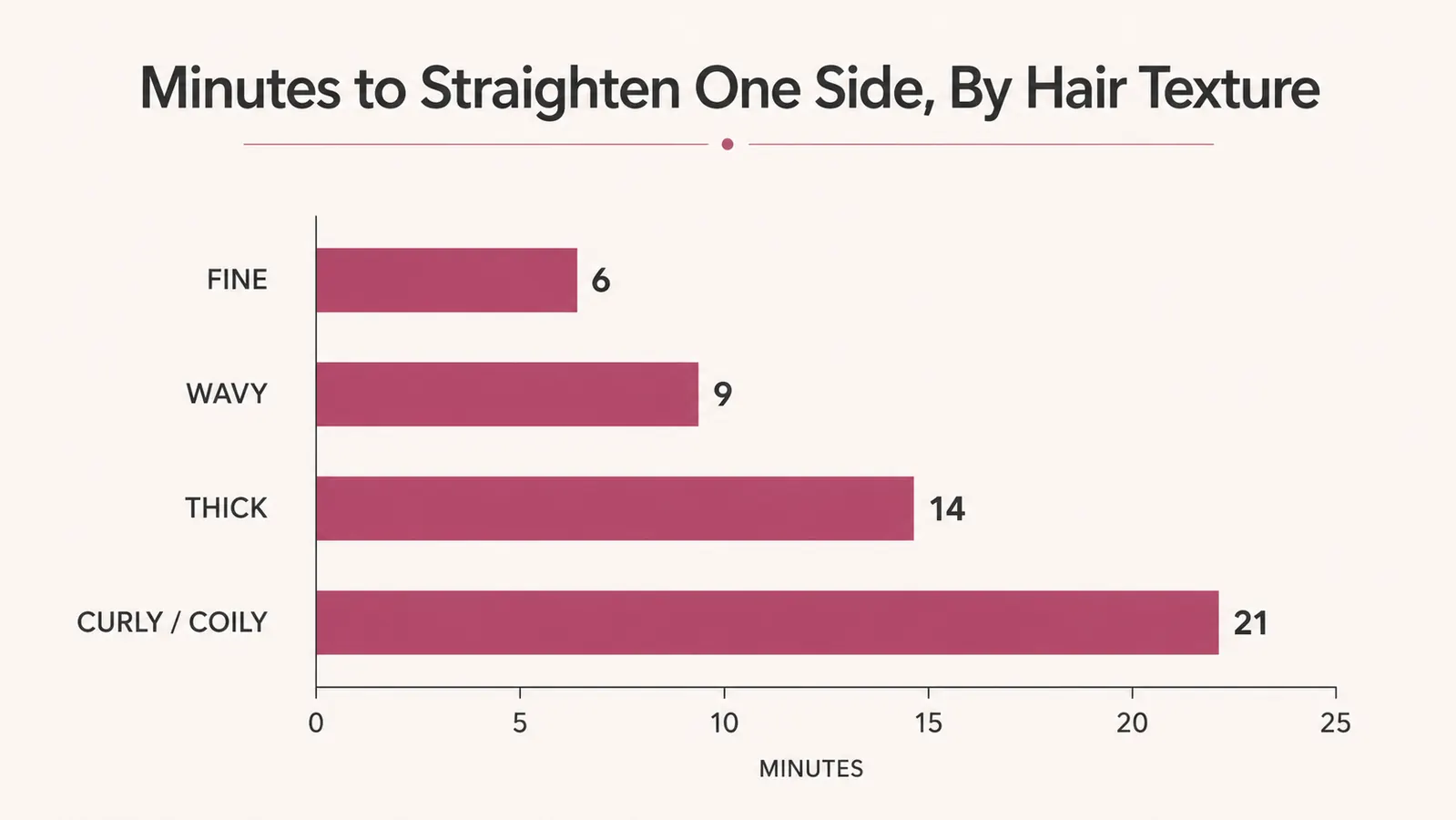
The marketing photos show someone gliding this brush through hair once, effortlessly, and walking away with a sleek blowout. That is not how it works on thick or curly hair. On my hair, a single pass does almost nothing except warm the section up. I need two, sometimes three passes per section to get real smoothness, and on my curliest pieces near my hairline, sometimes four. If you have 3B or 3C curls, or hair that's dense enough that a regular brush gets stuck in it, budget more time and more passes than the product photos suggest. I've also noticed the number of passes creeps up if I've skipped a deep conditioner that week. Hair that's even a little under-moisturized seems to resist the brush more and takes longer to lay flat, which was not something I expected walking in.
The second thing nobody warns you about is the smell. If your hair is even slightly damp, which happens more than you'd think when you're rushing in the morning, you will smell a faint singed scent on the first pass. It's not dangerous, it's just steam and residual moisture cooking off, but it startled me the first few times and I want you to know ahead of time instead of panicking mid-blowout like I did. I've since learned to towel dry and let my hair air dry for a good ten to fifteen minutes past what feels like enough before I ever pick this brush up.
The third thing is the weight and the wrist angle. This is heavier than a flat iron because it's a full brush head with a heating plate inside, not a slim two-plate clamp. On sections near the crown of my head, holding my arm up at that angle for the full ten to fifteen minutes it takes to do my whole head leaves my shoulder tired by the end. That's not a dealbreaker, but it's real, and I have not seen another review mention it. I've started doing my crown sections first while my arm still has energy and saving the easier front pieces for last.
The fourth thing, and this one actually annoyed me the first week, is that the display doesn't tell you it's ready. There's no beep, no color change, nothing. You just have to guess based on how long it's been plugged in, which for the first few uses meant I started brushing too early and got lukewarm, useless passes through my thickest sections before it had actually come up to temperature. I now just wait a full two minutes after turning it on, no matter what, before touching my hair.
How It Actually Performs on Thick, Curly Hair
Let's get specific. My hair is dense, past-shoulder-length, and naturally somewhere between wavy and curly depending on humidity, with about a year of box color on top. I section my hair into six parts before I start, because trying to grab a big chunk and expecting the TYMO Ring to smooth it in one go is how you end up with a half-straightened, half-wavy mess.
On the top layers, which are finer than the rest, it does genuinely well. Two passes at the highest heat setting, 450 degrees, gets those sections smooth and shiny with minimal frizz. The bristles detangle as they go, which matters because my hair snags in regular brushes constantly, and I no longer need to brush it out separately before styling.
The underlayers and the hair right at my nape are a different story. That's where my curl pattern is tightest and my hair is thickest. Even at the highest setting, I need three or occasionally four passes, and I still get a slight wave-back within a couple of hours if the weather is humid. It's not a failure of the tool exactly, it's a physics problem. A straightener brush moves faster through hair than a flat iron because the bristles distribute heat across more surface area at once, but that speed comes at the cost of pressure and precision on the most stubborn sections.
I've also learned that what I do before I pick up the brush matters almost as much as the brush itself. A wide-tooth comb through soaking wet hair to get tangles out, then a leave-in and a light serum before blow-drying, sets me up for fewer passes later. On weeks when I skip that prep, I end up doing an extra pass on almost every section, which tells me the tool is doing real work but it's not a substitute for basic hair prep the way some of the ads imply.
If you have hair like mine, the honest expectation is: smooth and polished, not pin-straight salon flat-iron results. If pin-straight is your goal on thick curly hair, a traditional flat iron section by section will get you closer, just slower and with more heat exposure overall.
I also want to flag the humidity factor because it changes everything. On a dry day, my results hold until my next wash, sometimes four or five days with a little dry shampoo help. On a humid summer day in my un-air-conditioned bathroom, I've seen the front pieces start to wave back within two or three hours. That's not unique to this brush, every heat styling tool struggles against humidity on curly hair, but the marketing never mentions weather as a variable and it should. If you live somewhere genuinely humid year-round, adjust your expectations accordingly and consider a light anti-humidity spray as a final step.
The Heat Settings Nobody Explains Properly
The dial has multiple temperature settings, but the manual doesn't really explain which one to use for which hair type beyond a vague chart. Through trial and error, here's what I've landed on. For my finer top layers, 365 degrees is plenty and keeps things gentler on color. For my thick mid-lengths and nape, I do need the top setting around 450 to get through in a reasonable number of passes, but I only use that setting on the sections that truly need it instead of blasting my whole head at max heat out of habit, which is what I did for the first month before I knew better.
I'd also warn you that going in cold, most people default to the highest setting because it feels like the fastest way to get results. On thin or damaged sections, that's a mistake. I've found starting at a mid setting and only bumping up for the truly stubborn spots gives a better balance between speed and hair health than starting at max and staying there for the whole routine.
The Color-Treated Hair Question
I was nervous about heat damage before I started using this regularly, since my color is already a stress point. Here's what I've noticed after five months of using it two to three times a week. My ends, which were already a little dry from the dye process, have not gotten noticeably worse, but they haven't improved either. I use a heat protectant spray every single time, no exceptions, and I genuinely think that's the only reason my color hasn't faded faster.
What did surprise me is that the mid-lengths, which take the most repeated passes because that's where my curl is heaviest, show more dullness than the roots or the ends. Repeated heat on the same section, even at a lower temperature, adds up. If you color your hair and plan to use this daily, I'd genuinely suggest turning the heat down to the 365 or 410 setting instead of maxing it out every time, even though it means slightly more passes.
My colorist actually asked what tool I was using when she noticed some extra dryness at my last appointment, and when I explained the multiple-pass situation on my thick sections, she wasn't surprised. Her advice, which I've followed since, was to skip a heat-styling day at least once a week and let a leave-in conditioner do the smoothing work instead. That single change made a bigger difference in how my color looks than anything else I tried.
The Burn Risk Nobody Mentions
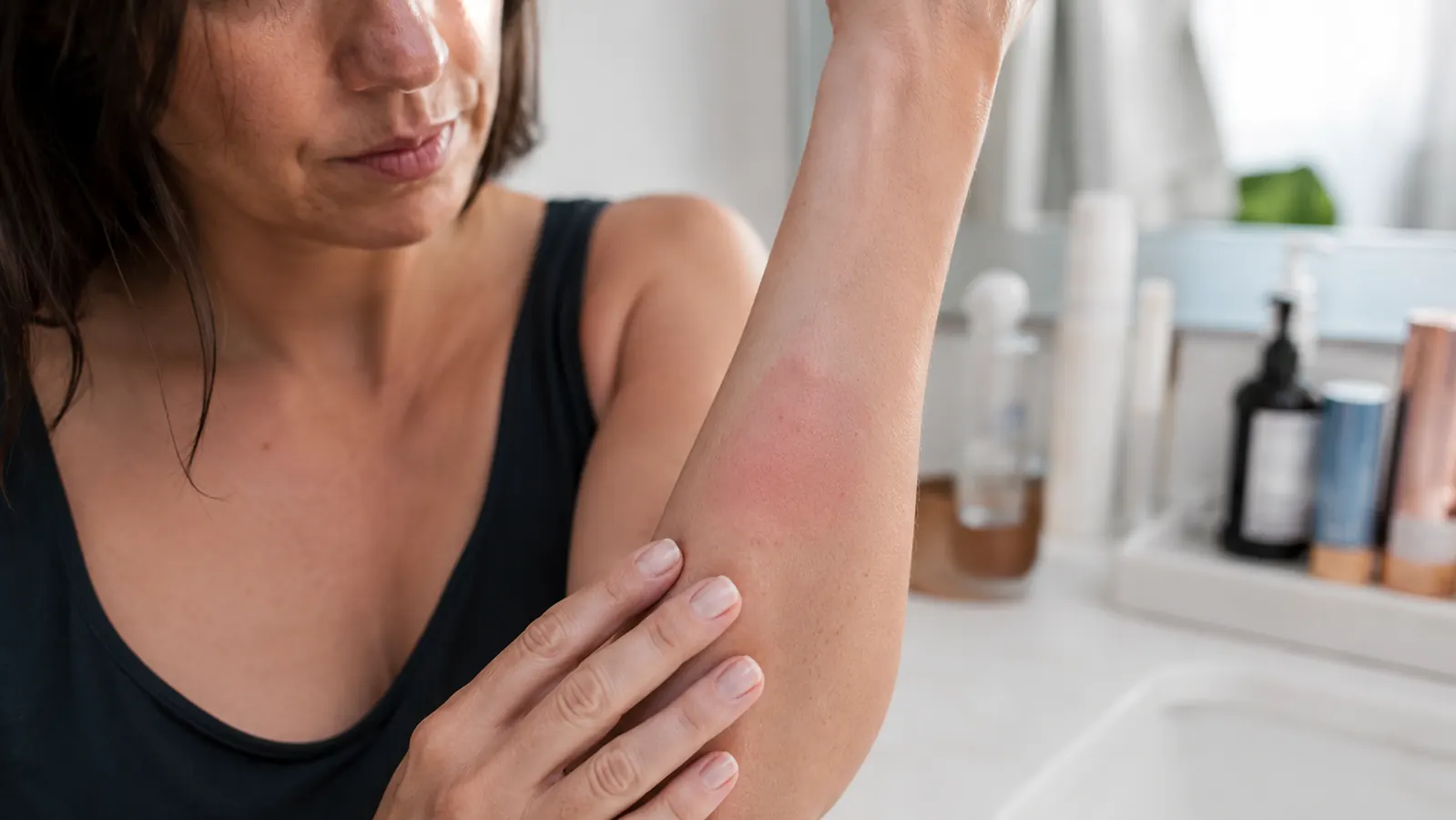
This is the part I most wanted to include in this review because it changed how I use the brush. The bristle plate gets genuinely hot, hot enough to leave a mark if it grazes your skin for more than a second, which happened to me near my wrist during week two when I was rushing and not paying attention near my hairline. It wasn't a serious burn, more like a faint red line that stung for an hour and faded by the next day, but it was enough to make me slow down.
The brush does have some heat-resistant bristles mixed in around the plate edges specifically so it's less likely to scald your scalp compared to a flat iron, and in fairness, that part of the design works. I've never burned my scalp with it. But your ears, your neck, and your hands are fair game if you're not careful, especially when you're working close to the hairline or doing the back of your head without a mirror. If you have young kids underfoot or you're someone who tends to get distracted mid-task, keep that in mind.
Cleaning and Upkeep, Also Skipped in Most Reviews
Nobody talks about the maintenance side of this brush, and on thick hair it matters more than you'd think. Product buildup, whether it's a leave-in cream, dry shampoo, or heat protectant spray, collects in the bristles fast because more passes means more product cooking onto the plate. By week three I noticed a slightly waxy residue on the bristle tips that was actually reducing how smooth my results looked.
The fix is simple but you have to actually do it. Once it's fully cooled, I wipe the bristles down with a damp cloth and a tiny bit of rubbing alcohol about once a week. It takes two minutes and it made a noticeable difference in glide and smoothness once I started doing it regularly instead of ignoring it like I did for the first month.
Travel, Storage, and Everyday Practicality
I travel for work every few months, and packing this brush is its own small negotiation. It's bulkier than a flat iron, closer to a hair dryer in size, so it eats up more suitcase space than I expected the first time I brought it along. There's no heat-resistant pouch included, which surprised me at this price point, so I bought a cheap heat-resistant mat separately to wrap it in before it goes in my bag.
Dual voltage is listed on the box, and it worked fine on a UK outlet last year with just a plug adapter, no converter needed. The cord itself is long enough that I rarely fight with outlet placement at home, and it swivels enough that it doesn't tug when I'm working around the back of my head. Small thing, but after years of fighting a stiff cord on an old flat iron, I noticed.
The Quick Verdict
Genuinely good for everyday smoothing on thick and curly hair, but it takes more passes, more patience, and more care around heat exposure than the marketing suggests.
Amazon Check Today's Price →What I Liked
- Detangles and smooths in the same motion, which saves a real step for thick hair
- Heat-resistant bristle ring means far less scalp contact than a flat iron
- Auto shutoff after about an hour is a genuine safety plus if you're forgetful like me
- Handles color-treated hair fine with a heat protectant and moderate temperature
Where It Falls Short
- Needs 2-4 passes on thick or curly sections, not the one-pass result shown in marketing photos
- Heavier and more wrist fatigue than a flat iron over a full head
- The plate can genuinely burn skin if it grazes your wrist, ear, or neck
- Repeated passes on the same section add up to more cumulative heat than people expect
- No ready indicator, so you have to guess when it's actually hit temperature
It's a good brush. It is not a magic wand, and anyone who tells you thick curly hair goes pin-straight in one swipe has different hair than I do.
Who This Is For
If your hair is fine to medium texture, straight to loosely wavy, or you're mainly looking to smooth frizz and add polish rather than achieve stick-straight results, this brush will likely impress you fast. It's also a strong pick if you're currently using a flat iron and want something faster for daily maintenance between wash days, since the brush shape covers more hair per pass even if it needs repeating on tough sections. If you have thick or curly hair but your priority is a smoother, more polished everyday look rather than a flat-iron-perfect finish, and you're willing to give it a couple extra minutes and passes, it earns its place on the counter.
Who Should Skip It
If you have very tight curls (4A through 4C) and your goal is bone-straight results without heavy heat exposure, a traditional flat iron with a proper blowout first will get you there with fewer total passes and less cumulative heat on any one section. Same goes if you're extremely heat-averse with already damaged or brittle color-treated hair. This brush is not gentler than a flat iron just because it looks friendlier. It's a different tool with its own tradeoffs, not a lower-risk one. And if you're someone who tends to rush through your routine without paying close attention, the burn risk near your hairline and ears is worth taking seriously before you buy.
Know what you're actually getting before you buy
See current pricing and availability for the TYMO Ring straightener brush on Amazon, and decide if the tradeoffs are worth it for your hair type.
Amazon Check Today's Price on Amazon →