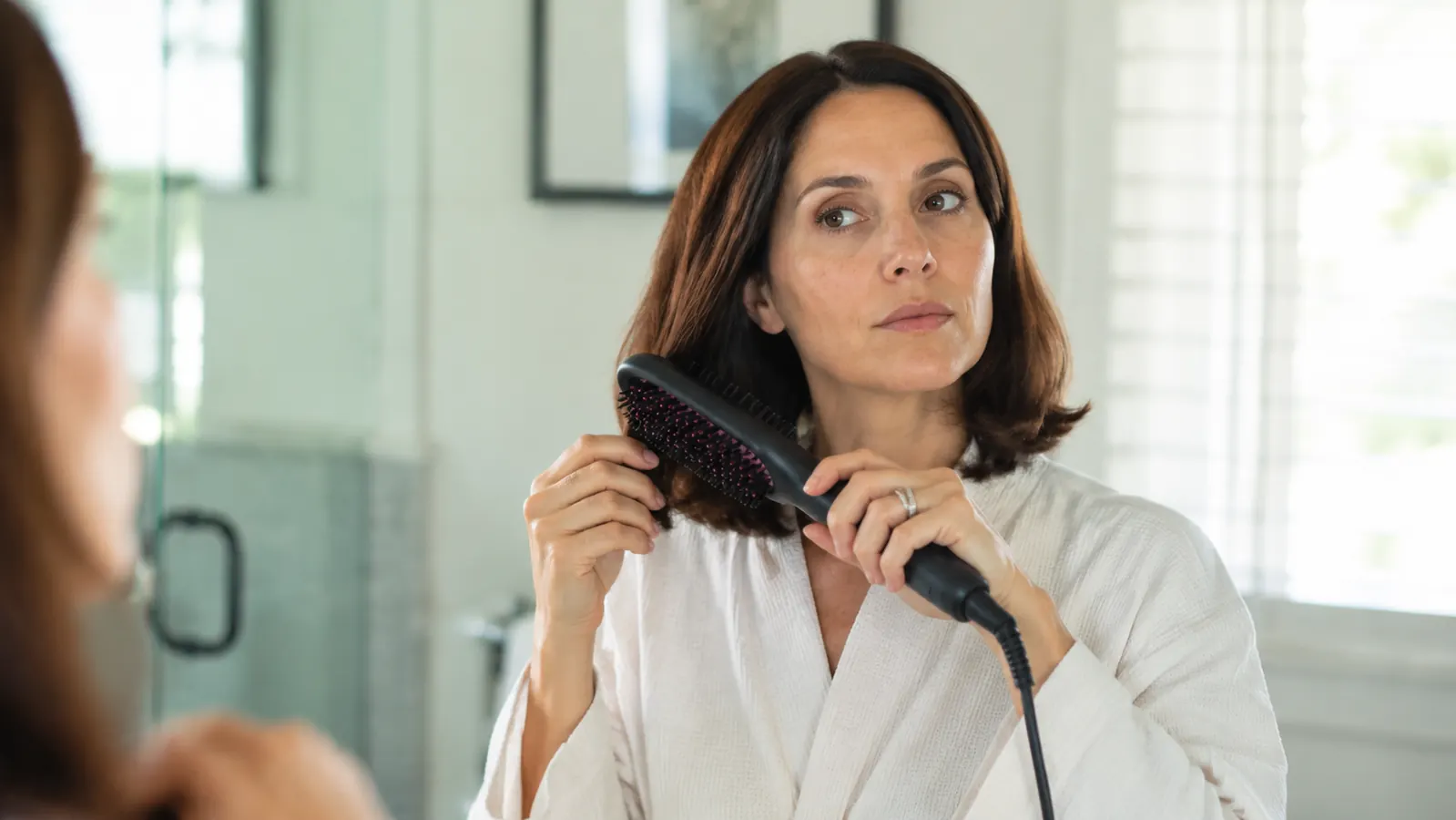
I used a flat iron for almost fifteen years before I picked up a straightener brush, and I'll be honest, I didn't expect much. It looked like a glorified hairbrush with a cord. But after a few weeks of using the TYMO Ring on my own hair most mornings, I stopped reaching for my flat iron entirely. Not because the flat iron stopped working, it still does exactly what it always did. It's because the brush quietly solved ten small, annoying problems I'd just learned to live with.
If you're on the fence about switching, here's exactly what changed for me, in order of how much it actually mattered on a normal weekday morning, not a special occasion where I have time to fuss over every section.
Still sectioning your hair with a flat iron every morning?
The TYMO Ring straightener brush does the sectioning for you, so you can go from damp-ish to smooth in one pass. Here's the model I've used for months.
Amazon Check Today's Price on Amazon →You don't have to section your hair first
With a flat iron, I was always parting hair into four or five clips before I even started, otherwise I'd miss chunks underneath and end up circling back to the same spot twice. The straightener brush's bristles naturally comb through a wider section as you pull, so I just grab a piece about two inches wide and go. No clips, no prep, no standing there parting hair before I've had coffee.
It's nearly impossible to burn your scalp or ears
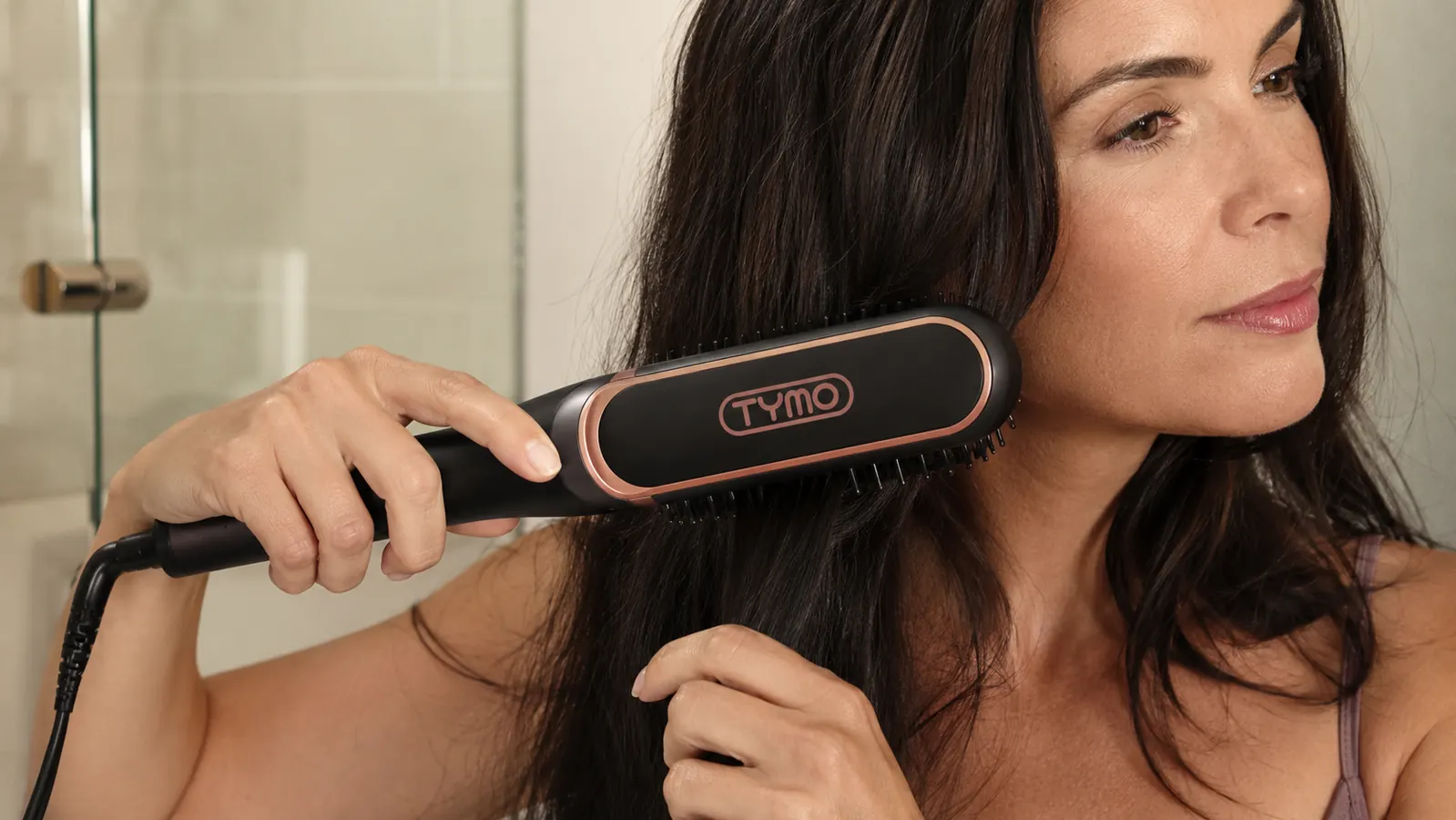
I have a small burn scar near my hairline from a flat iron slip in college. The plates get close to skin fast, especially near the roots, and one wrong angle and you feel it. The brush's bristles keep the heating plate a few millimeters off your scalp the whole time, so even when I'm rushing near my part line, I'm not white-knuckling it the way I used to.
Mornings are genuinely faster
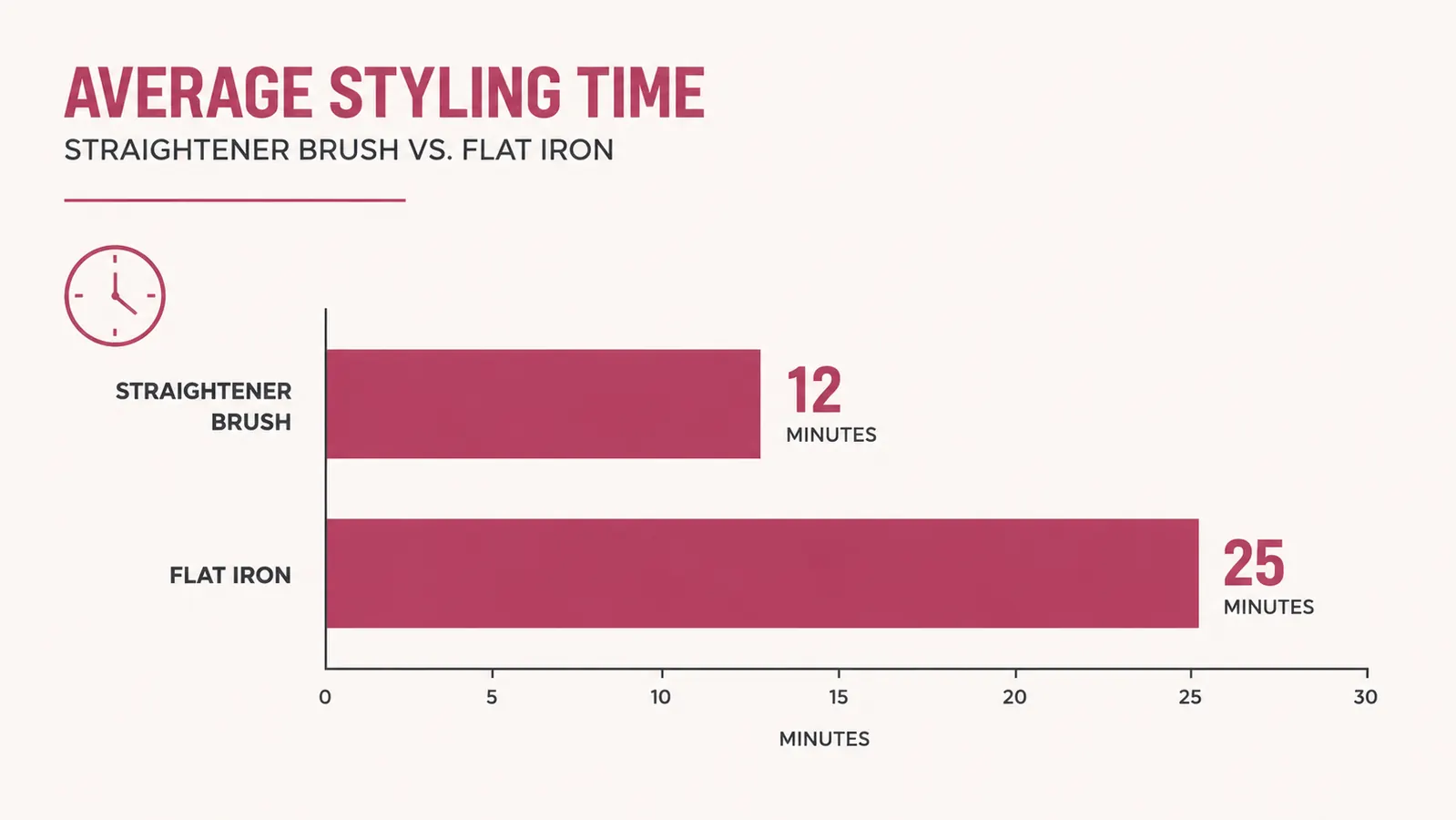
This was the one I doubted most before trying it. But timing myself over a week, my straightener brush routine landed around 9 to 11 minutes for shoulder-length hair, versus 16 to 18 minutes with the flat iron doing the same finished result. The bigger contact surface and comb-through motion just cover more hair per pass, so I'm not redoing sections I thought I already finished.
One hand does the whole job
Flat irons need two hands really, one to hold the section taut, one to clamp and pull down the length. The brush does the tensioning itself as you comb through, so I can hold my phone, scroll my calendar, or hold a coffee mug in the other hand while I finish the back sections. It sounds minor until you realize how much of your morning is spent standing at the mirror with both hands occupied and nothing else getting done.
It works on damp-ish hair without the drama
I'm not going to tell you to straighten soaking wet hair, that's rough on any heat tool and not something I'd recommend regardless of brand. But the brush handles slightly damp, mostly air-dried hair far better than my flat iron ever did. The flat iron would sizzle and steam if I got impatient and started too early. The brush just needs a couple extra passes and doesn't punish you for skipping the blow dryer on a rushed day.
Less visible heat damage over time
My hairstylist pointed this out to me around month three, not the other way around. Fewer high-heat clamp-and-hold passes means less concentrated stress on any one section of hair, since the brush distributes heat as it moves instead of pausing on a single spot. I still use a heat protectant every time, that part doesn't change no matter which tool you pick, but the ends of my hair have looked noticeably less fried since I switched over.
It doubles as a smoothing brush on non-styling days
On days I don't want full heat styling, I'll run the brush through on the lowest setting or even cold just to smooth flyaways after a workout or before a call. Try doing that with a flat iron and you'll clamp your hair into a crease instead of smoothing it out, which usually makes things look worse, not better.
No plate marks or crease lines
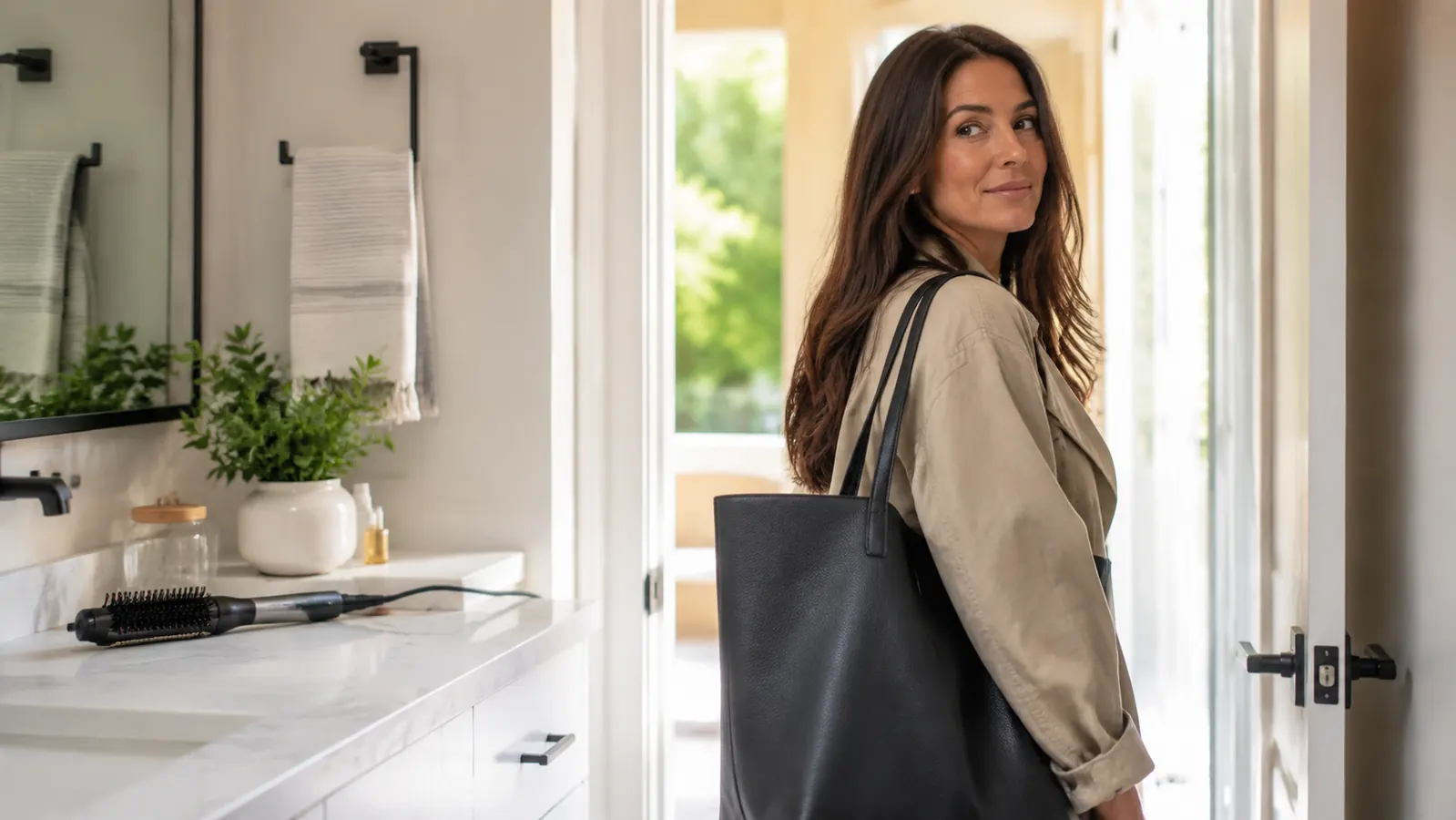
Flat irons leave that telltale bend line if you grip a section wrong or pause a second too long mid-stroke. Because the brush keeps hair moving through the bristles the entire time instead of clamping it flat and holding, I stopped getting those weird kinks near my crown that used to show up by midafternoon and needed a second touch-up.
It's easier to travel with
The brush handle is shaped more like, well, a brush, so it doesn't roll around loose in a bag or dig into other items the way a flat iron's flat plates do. I toss mine in a silicone heat-resistant pouch and it fits in the same spot my old flat iron used to awkwardly poke out of, cord and all.
Less arm fatigue on thicker sections
This one genuinely surprised me. Flat ironing thick hair means repeated clamping and pulling motions that add up to real forearm fatigue by the time you're done with a full head, especially on wash day when hair is fullest. The brush's comb-through motion is closer to just, well, brushing your hair. My arms don't feel it anymore by the last section, even on days I'm doing my whole head start to finish.
What I'd Skip
I'll give you the honest downside too, because no tool is perfect for every situation. If you need pin-straight, glass-flat hair for a wedding or a photo shoot, a flat iron still wins on that specific finish. The brush gives you smooth and sleek, not stick-straight-runway flat, and that's a real difference if you're chasing a very specific look. On very short hair, under two inches, the bristle design doesn't have enough hair to grip properly, so a flat iron or a small mini straightener is still the better call there. For everyday wear though, the kind of hair day most of us are actually having, the brush has replaced my flat iron on every day that isn't a special occasion.
The flat iron still lives in my drawer for special occasions. The brush lives on my counter, because that's what actually gets used on a random Tuesday.
Ready to cut your styling time in half?
The TYMO Ring straightener brush is the one I've used for months of regular mornings, no salon visit required.
Amazon Check Today's Price on Amazon →