

Short answer: if your skin gets red, tight, or flushed easily, the La Roche-Posay Toleriane Hydrating Gentle Cleanser is the one I keep buying. Cetaphil Gentle Skin Cleanser isn't a bad product, and I understand why it's been a drugstore staple for decades, but on my skin it left a faint film that Toleriane doesn't. If your skin is more "normal, just wants something mild," Cetaphil will do the job for less money, and I'll walk through exactly where that split makes sense so you're not just taking my word for it.
I split my routine for four weeks. Left cheek and jaw got Toleriane every morning and night. Right side got Cetaphil on the same schedule. Same water temperature, same towel, same moisturizer after both, a plain ceramide cream with no actives, so I wasn't introducing a second variable. It sounds a little obsessive, but with rosacea-prone skin, half a degree of difference in a cleanser shows up fast. I've been burned before by "gentle" cleansers that turned out to be gentle for everyone except me, so I wanted a real side-by-side instead of trusting my memory of how each one used to feel back when I tried them separately, months apart, without any consistent way to compare. I also wanted to see how each one held up once I layered sunscreen, makeup, and a long workday on top, not just how they felt fresh out of the bottle in a quiet bathroom with nothing else going on.
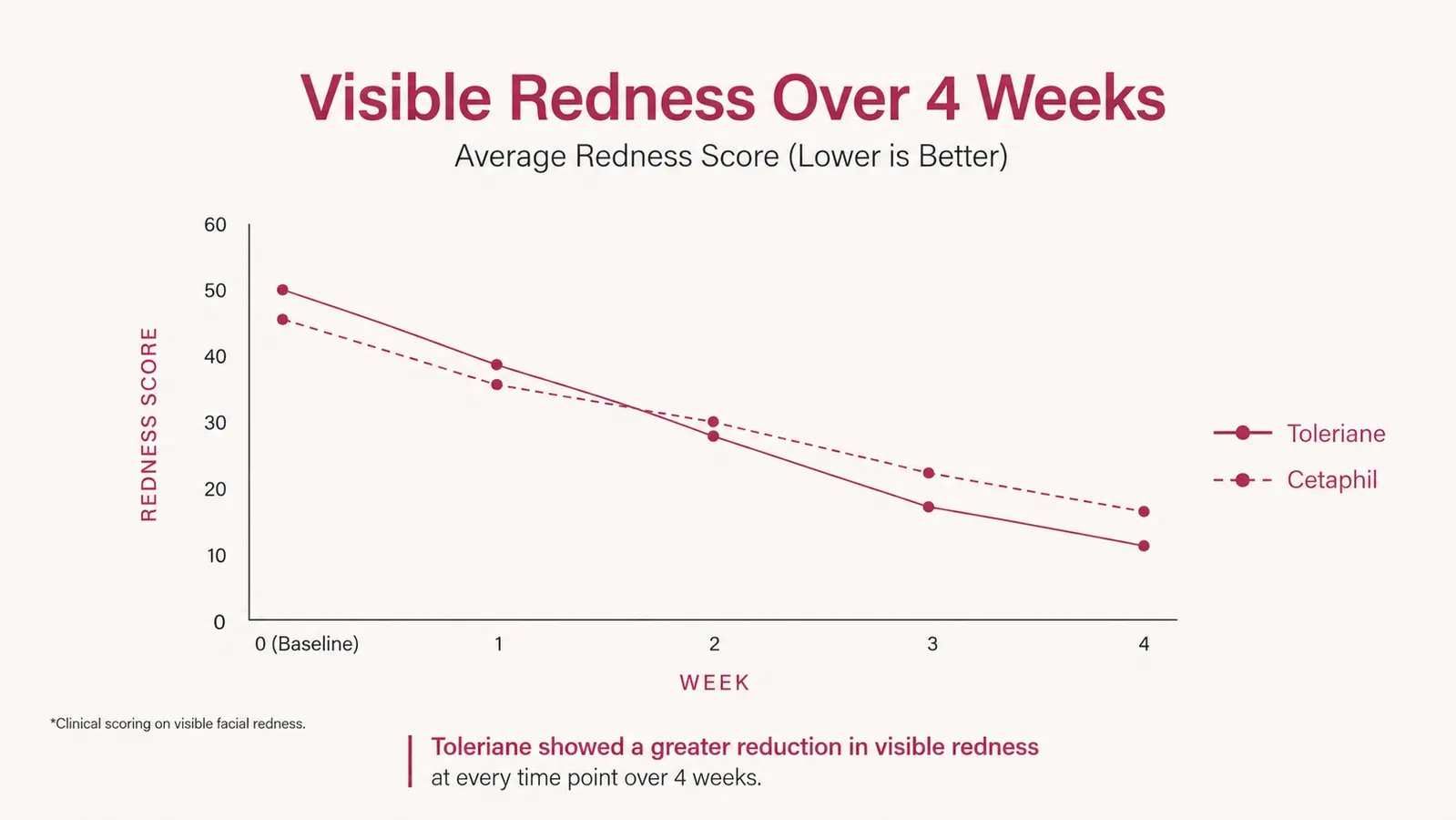
Both of these show up constantly on dermatologist recommendation lists, and both are marketed as fragrance-free and non-irritating, which is part of why people get stuck choosing between them. They're priced close enough that cost alone doesn't make the decision obvious, and the packaging on both looks almost clinical on purpose, blue and white bottles, plain fonts, ingredient callouts right on the front label. So the real differences live in the ingredient list and in how your specific skin reacts once it's on your face, not in anything you can tell from the shelf. I also kept a simple daily log, a one-to-five redness rating each morning and night, because after two weeks it's easy to convince yourself you remember which side felt better when really you're guessing.
| La Roche-Posay Toleriane | Cetaphil | |
|---|---|---|
| Product | La Roche-Posay Toleriane Hydrating Gentle Cleanser | Cetaphil Gentle Skin Cleanser |
| Price (16.9 oz) | Check today's price on Amazon | Check today's price on Amazon |
| Texture | Lightweight lotion-milk, no lather | Thin lotion, very slight lather |
| Key ingredients | Niacinamide, glycerin, ceramide-3, ultra-purified thermal spring water | Glycerin, cetyl alcohol, sodium lauryl sulfate (trace) |
| Rinse-off feel | Skin feels soft, no tightness | Slight residue, needs a second splash |
| Fragrance | Fragrance-free, thermal spring water base | Fragrance-free, standard water base |
| Makeup removal | Removes light makeup, needs a separate remover for mascara | Removes light makeup, similar mascara limitation |
| Best for | Rosacea, eczema-prone, very reactive skin | Normal to mildly dry skin, budget-conscious |
| Dermatologist mentions | Frequently recommended for barrier repair | Frequently recommended as a basic safe default |
Where Toleriane Wins
The niacinamide is the real difference for me. Cetaphil's formula is fine, but it's built around cetyl alcohol and a small amount of sodium lauryl sulfate for that faint lather, and on my cheeks that trace of SLS was enough to bring up a light flush within a few minutes of washing. Toleriane has none of that. It's a milk, not a foam, and it doesn't try to feel "cleansing" in the traditional squeaky sense. The niacinamide also seemed to calm the blotchiness on my jaw that flares whenever I eat something spicy or spend time outside in the wind, which used to mean at least one visible flare-up a week regardless of what else I did.
The other win is what happens after you rinse. With Cetaphil, I could feel a faint film on my skin, not greasy exactly, but not fully rinsed clean either, which is by design since it's meant to leave a thin protective layer for drier skin types. Some people like that. My skin didn't. It felt like a layer sitting on top of whatever serum I put on next, almost like the moisturizer wasn't absorbing the way it should. Toleriane rinses fully clean but somehow doesn't leave that tight, stripped feeling a lot of "clean rinsing" cleansers give reactive skin. That balance, actually clean but not stripped, is hard to find and it's the main reason I've stuck with it past the trial month.
There's also the thermal spring water, which sounds like a marketing gimmick until you notice the pattern across nearly every La Roche-Posay product. It's mineral-rich and formulated to be low-irritant, and while I can't prove it's doing anything on its own, the overall formula clearly leans toward calming over cleansing power. For someone who has spent years avoiding certain face washes because they turn blotchy by the end of the shower, that tradeoff is worth paying for. By week three, the log I kept showed my Toleriane side sitting at a consistent one or two out of five for redness, where the Cetaphil side hovered closer to three, especially on mornings after a poor night of sleep or a salty dinner the night before, which are both known triggers for me.
Stop guessing which gentle cleanser your skin actually needs
If redness, tightness, or random flare-ups are part of your routine, the Toleriane cleanser is worth trying before you spend another month cycling through drugstore bottles that promise gentle and deliver tight.
Amazon Check Today's Price on Amazon →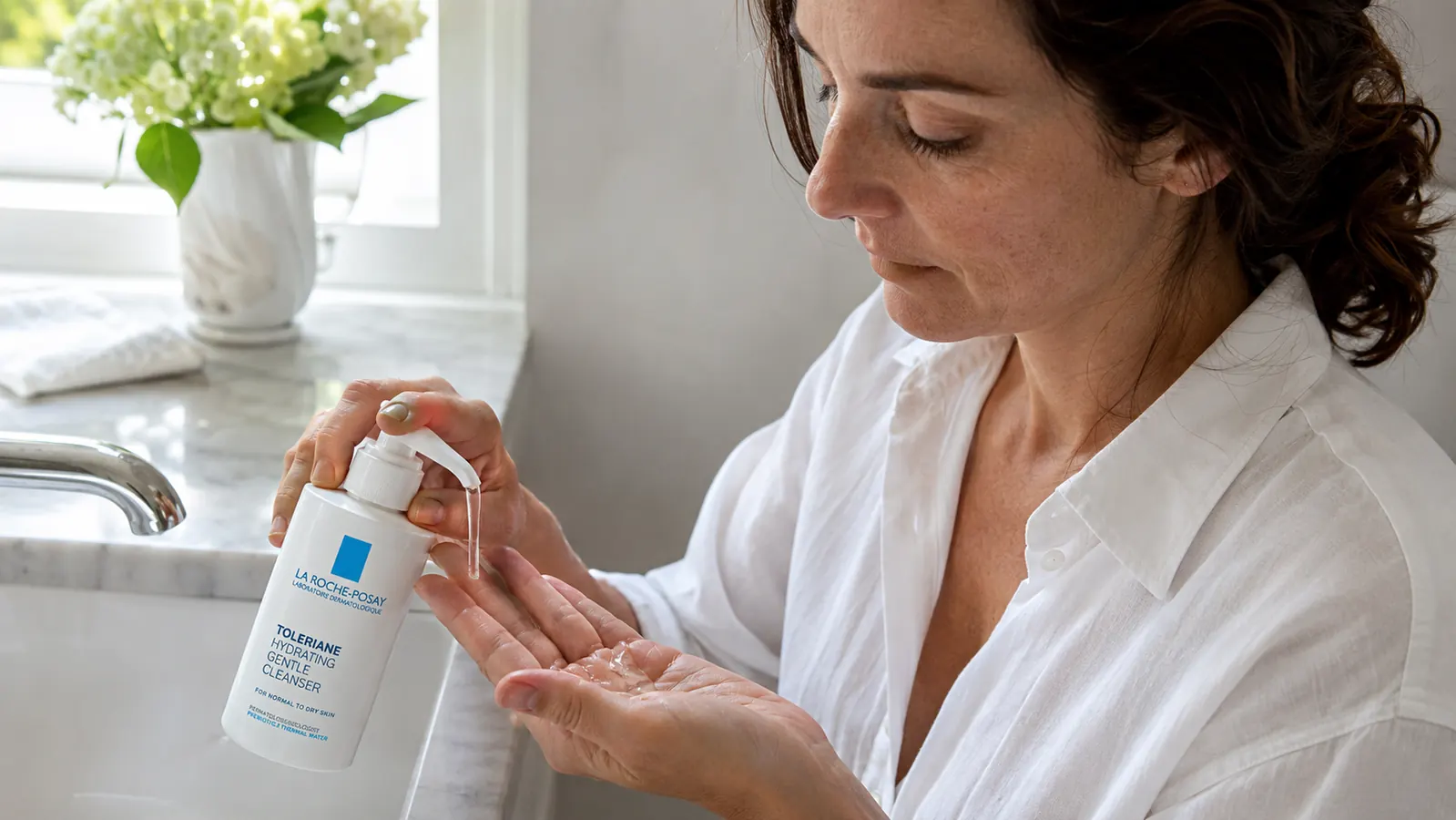
Where Cetaphil Wins
Price is the obvious one. At roughly $13 for the same size bottle where Toleriane runs closer to $20, Cetaphil is the cheaper habit to build, and for someone whose skin isn't particularly reactive, that price gap matters more than a niacinamide boost they may not even notice. If your skin tolerates most things and you just want a reliable, unscented, dermatologist-approved cleanser to wash off sunscreen and daily grime, Cetaphil has earned its reputation honestly, and it's been the default recommendation for post-procedure and sensitive skin for so long that it's practically shorthand for "safe choice" in dermatology offices.
It also has a slightly more "cleanser-like" feel during use, that light lather, which some people find more satisfying than a milk that you have to trust is working even though it doesn't foam. My mother-in-law has used Cetaphil for fifteen years and has zero interest in switching. Her skin is normal, not reactive, and for her the extra cost of Toleriane wouldn't buy her anything she'd actually feel. She also travels a lot and likes that Cetaphil is sold at literally every drugstore and grocery store, where Toleriane sometimes means an extra stop or an online order.
Cetaphil is also the one I'd hand to a teenager just starting a skincare routine, or to anyone who's never had a reaction to anything and doesn't want to overthink face wash. It's forgiving, it's cheap enough to not feel precious about, and it does the basic job of removing dirt and sunscreen without adding anything complicated to the equation. And to be fair, plenty of people with combination or oily skin actually prefer that light lather and slight residue feel, since it can read as more moisturizing right after a wash, especially in dry winter months.
Cetaphil is the reliable default. Toleriane is the upgrade you reach for once your skin starts telling you the default isn't enough anymore.
Makeup Removal and the Eye Area
Neither one is a proper makeup remover, and I wouldn't trust either to take off a full face of foundation or waterproof mascara on its own. Both needed a micellar water pass first on heavier makeup days, then the actual cleanser as a second step. Where they differed was around my eyes. Cetaphil felt slightly more slippery going on, which made it a little easier to work around the lash line without tugging, but it also meant I sometimes got a light sting if any got too close to my eye itself. Toleriane doesn't sting even with direct contact, which matters more than it sounds like it should when you're washing your face half asleep at eleven at night and not being careful about where your hands are.
For lighter makeup days, tinted moisturizer and a bit of concealer, either cleanser handled it fine in one pass. It's really only on full-coverage days that the gap becomes obvious, and on those days I reached for a dedicated makeup remover before either cleanser regardless. So if your routine already includes a separate remover step, this difference mostly disappears and you're back to choosing based on how your skin feels day to day rather than how either product performs on mascara.
Does One Last Longer Than the Other
Both bottles are close in size, and neither one is a splurge you use sparingly. A little goes a long way with each, roughly a dime-sized amount per wash, so a single bottle of either one lasted close to two months for me using it twice a day. That means the real cost difference between them isn't as dramatic as the shelf price suggests once you break it down monthly, closer to a three or four dollar gap rather than the seven dollar gap on the sticker. That's worth knowing if price is the only thing holding you back from trying Toleriane, because the actual monthly cost difference is smaller than it looks, and it's roughly the price of one coffee run to switch to the one that actually calmed my skin down.
Who Should Buy Which
If you've been diagnosed with rosacea, have visible redness that flares with heat or spice, or you've noticed your skin feels tight within an hour of washing no matter what you use, go with Toleriane. The niacinamide and ceramide combo is doing real work for barrier support, not just marketing copy on the box, and after four weeks the difference in how calm my skin looked by evening was hard to argue with. If your skin is fairly cooperative and you mostly want an inexpensive, no-nonsense cleanser that won't cause problems, Cetaphil is a completely reasonable choice and you shouldn't feel like you're settling by picking it.
I'd only tell you to skip Cetaphil if you've already tried it and noticed the same faint residue I did, or if you already know you're prone to redness and flushing. In that case, the switch to Toleriane is worth the extra few dollars a month. And if you're not sure which camp you're in, that's honestly the most common situation, buy the smaller size of Toleriane first, run it for two to three weeks, and pay attention to how your skin feels by the end of the day rather than right after rinsing. That end-of-day feeling is where the real difference between these two cleansers shows up, and it's the one thing no ingredient list on a bottle can tell you in advance.
Ready to see if Toleriane calms your skin the way it calmed mine
A month is enough time to know if a cleanser is helping or just sitting on your sink. Grab the Toleriane cleanser and give your skin a real, side-by-side test.
Amazon Check Today's Price on Amazon →